LGBTQ+ · San Francisco
How Robert Hillsborough’s Murder Galvanized San Francisco’s LGBTQ+ Movement
The 1977 killing of Robert Hillsborough became a turning point in San Francisco’s LGBTQ+ political organizing, helping channel grief and outrage into a broader fight for human rights.
By KLGBT News Desk ·
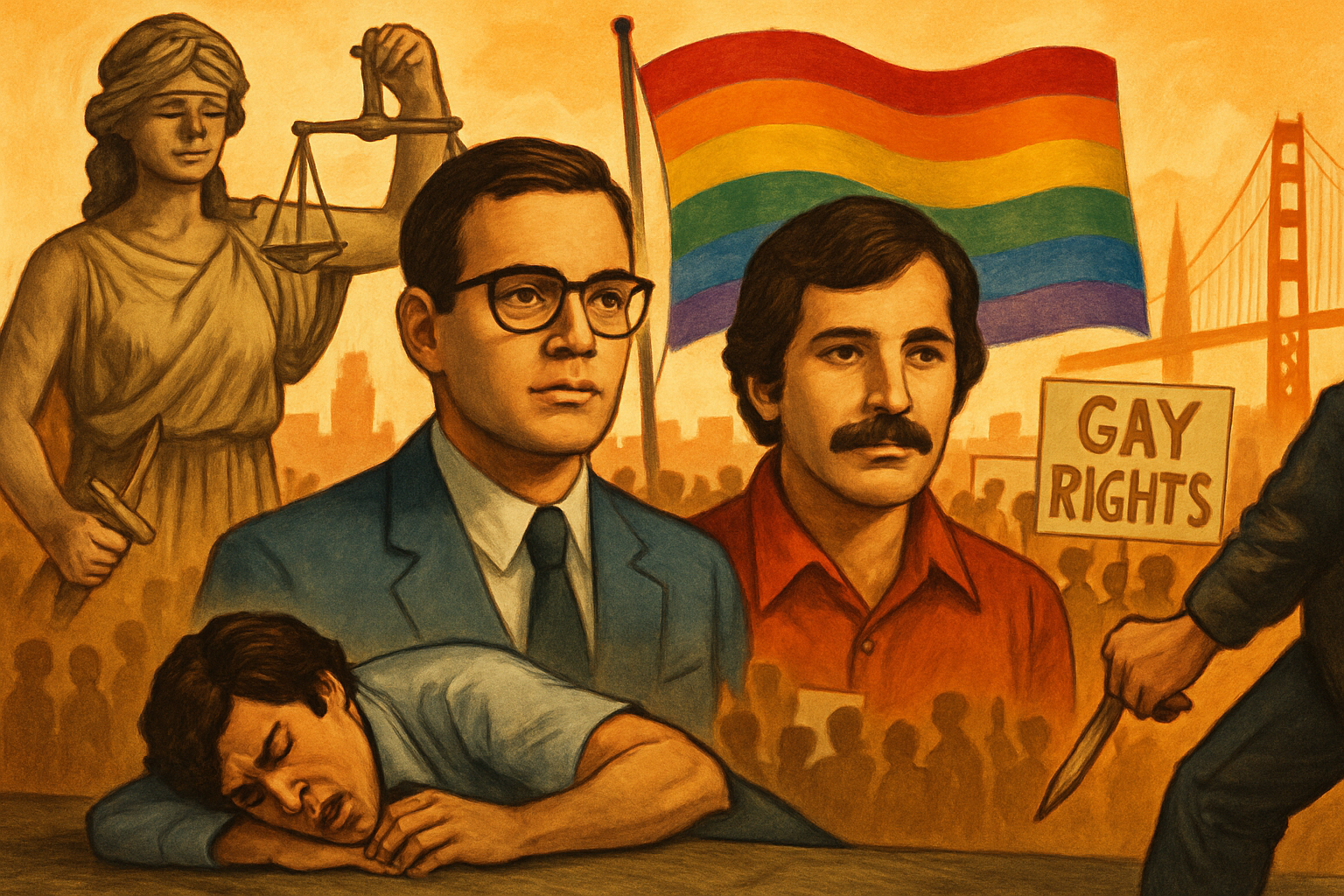
On June 22, 1977, Robert Hillsborough was killed in San Francisco’s Mission District in an attack that would reverberate far beyond the immediate crime. Hillsborough, a 33-year-old gay man, was followed to his apartment by a group of young men after leaving a disco. John Cordova, a 19-year-old from Daly City, was later convicted of second-degree murder and sentenced to 10 years in prison.
The attack took place during a period of intense national hostility toward LGBTQ+ people. Hillsborough was the nineteenth gay man murdered in the United States that year, according to the historical account of the case. Yet his death became a particularly significant catalyst in San Francisco, where LGBTQ+ residents and organizers mobilized more forcefully around safety, political representation and human rights.
Hillsborough’s life was rooted in the city’s civic landscape. He worked as a gardener caring for plants and trees at a playground near San Francisco City Hall. Children at the park knew him by the nickname “Mr. Greenjeans,” a reflection of his visible and familiar presence in the neighborhood.
The killing also became part of a broader legal and political confrontation over anti-gay rhetoric. Hillsborough’s family brought an unsuccessful lawsuit against Anita Bryant, an anti-gay activist whose public campaigning had helped intensify hostility toward gay people. The legal defeat did not erase the case’s political impact. Instead, the murder contributed to growing recognition that anti-LGBTQ+ rhetoric could shape the climate in which violence occurred.
Remembering Hillsborough means placing his death within both the personal and collective history of San Francisco. He was not only the victim of a violent crime; he was a city resident with work, relationships and a daily connection to a local park. His murder exposed the dangers facing gay men and other LGBTQ+ people while also helping galvanize organized resistance.
The case remains part of San Francisco’s LGBTQ+ history because it illustrates how mourning can become political action. In the aftermath, community members confronted the need to demand protection and equal treatment rather than accept violence as an inevitable part of gay life. Hillsborough’s name therefore endures alongside the movement that grew more determined to secure human rights for LGBTQ+ people.
Source and reuse information This backgrounder adapts factual material from “Murder of Robert Hillsborough” on Wikipedia: https://en.wikipedia.org/wiki/Murder_of_Robert_Hillsborough The adapted text is released under the Creative Commons Attribution-ShareAlike 4.0 International license (CC BY-SA 4.0): https://creativecommons.org/licenses/by-sa/4.0/. This story has not been independently reviewed or fact-checked.
Further links listed by the Wikipedia page (not independently checked): - https://geohack.toolforge.org/geohack.php?pagename=Murder_of_Robert_Hillsborough¶ms=37.760225_N_122.420692_W_type:event_region:US-CA - https://bcrw.barnard.edu/archive/lesbian/Out.pdf - https://books.google.com/books?id=WLZCBMtH5SgC&dq=Robert+Hillsborough&pg=PA154 - https://books.google.com/books?id=398bDQAAQBAJ&dq=Robert+Hillsborough&pg=PA360 - https://books.google.com/books?id=jpaauFUgLuAC&dq=Robert+Hillsborough&pg=PA319 - https://books.google.com/books?id=B7nffG4WBrIC&dq=Robert+Hillsborough&pg=RA1-PT168 Image rights Original illustrative artwork created from story keywords. It is not a documentary photograph.