LGBTQ+ · San Francisco
José Sarria’s San Francisco Legacy Reaches From Drag Performance to Political History
José Sarria helped shape San Francisco’s LGBTQ+ history as a Black Cat performer, political candidate and founder of the Imperial Court System.
By KLGBT News Desk ·
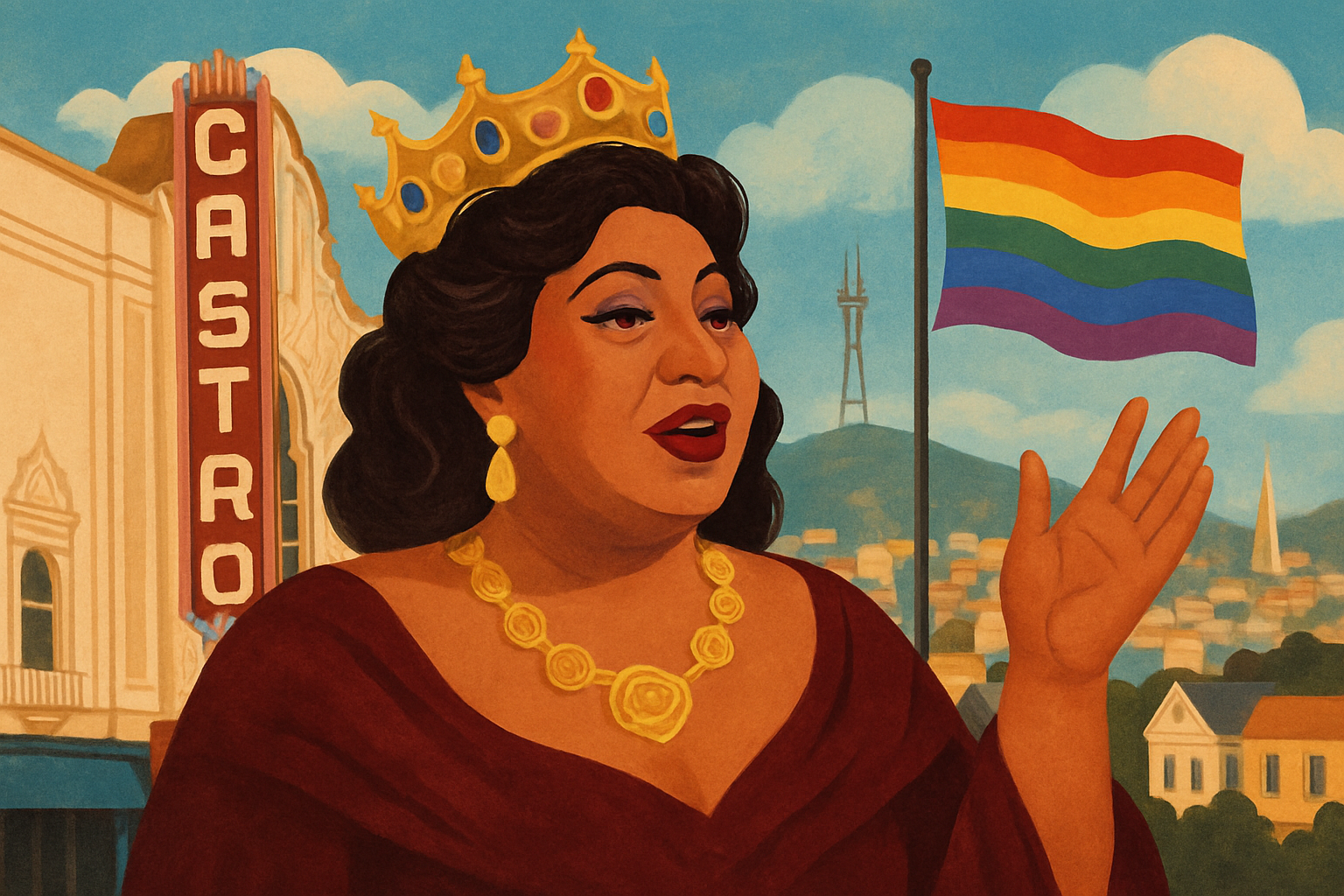
José Sarria occupies a singular place in San Francisco’s LGBTQ+ history. A performer, activist and organizer, he became the first openly gay candidate for public office in the United States when he ran in 1961.
Sarria was born in San Francisco on December 13, 1922. His parents were Maria Dolores Maldonado and Julio Sarria, and his family background included Spanish and Colombian roots. His mother, Maria, was born in Bogotá and came from a politically active upper-class family. After her mother’s death and the upheaval surrounding Colombia’s Thousand Days War, Maria left the country with help from a family connection and eventually relocated to Panama under the protection of the United States.
Sarria later became well known as a drag performer at the Black Cat Bar, a landmark gathering place in San Francisco’s North Beach neighborhood. His performances were part of a broader public life in which entertainment, community-building and political advocacy overlapped. At a time when openly LGBTQ+ people faced intense discrimination, appearing before an audience in drag and speaking publicly about gay life carried particular significance.
His 1961 campaign made that visibility part of electoral politics. Sarria’s candidacy did not simply place an LGBTQ+ person’s name on a ballot; it challenged the expectation that gay people should remain hidden from public life. The campaign established him as a national figure in the history of LGBTQ+ political representation, while keeping San Francisco at the center of that story.
Sarria also founded the Imperial Court System, an organization that grew from ceremonial titles, performances and fundraising into a lasting institution within LGBTQ+ communities. Through the system, participants adopted royal names and roles, creating a structure that combined pageantry with community activity. Sarria himself was known by several titles, including The Grand Mere, Absolute Empress I de San Francisco and the Widow Norton.
Those titles reflect the theatrical style that was central to Sarria’s public identity, but they also point to his ability to turn performance into an organizing tool. His work connected nightlife, political expression and community leadership in ways that helped define San Francisco’s LGBTQ+ culture.
Sarria died on August 19, 2013, at age 90. His legacy remains tied to several strands of the city’s history: the Black Cat’s role as a gathering place, the emergence of openly LGBTQ+ candidates and the Imperial Court’s continuing place in queer community life. Together, those contributions make Sarria an essential figure in understanding how San Francisco’s LGBTQ+ movement became visible, organized and politically assertive.
Source and reuse information This backgrounder adapts factual material from “José Sarria” on Wikipedia: https://en.wikipedia.org/wiki/Jos%C3%A9_Sarria The adapted text is released under the Creative Commons Attribution-ShareAlike 4.0 International license (CC BY-SA 4.0): https://creativecommons.org/licenses/by-sa/4.0/. This story has not been independently reviewed or fact-checked.
Further links listed by the Wikipedia page (not independently checked): - https://viaf.org/viaf/43588331 - https://www.youtube.com/watch?v=fg61D1uklpI - https://web.archive.org/web/20060630074803/http://www.pe.com/localnews/desert/stories/PE_News_Local_D_gayhistory25.1d0558c0.html - https://www.nytimes.com/2013/08/24/us/jose-sarria-gay-advocate-and-performer-dies-at-90.html - https://www.theatlantic.com/magazine/archive/2011/11/the-queen-of-san-francisco/8660/ - https://web.archive.org/web/20131203005833/http://www.glbtq.com/social-sciences/sarria_j.html Image rights Original illustrative artwork created from story keywords. It is illustrative, not a documentary photograph.