Culture · San Francisco
‘The Times of Harvey Milk’ Preserves San Francisco’s LGBTQ Political History
Rob Epstein’s 1984 documentary follows Harvey Milk’s political career, assassination and the aftermath of the Dan White trial, with a lasting connection to San Francisco’s Castro Theatre and film history.
By KLGBT News Desk ·
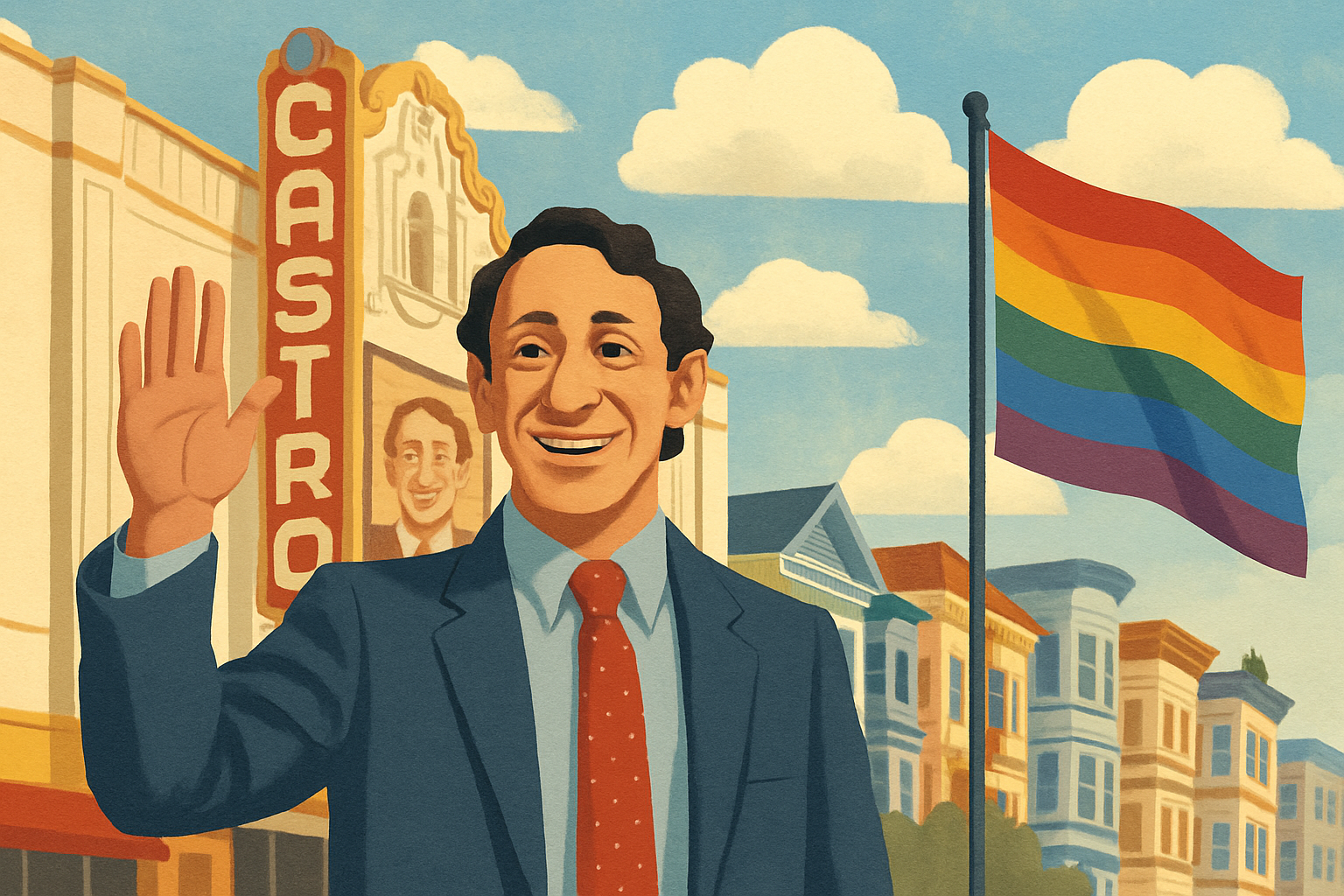
Rob Epstein’s documentary “The Times of Harvey Milk” remains closely tied to San Francisco—not only because of its subject, but also because the city hosted the film’s first public presentation after its festival premieres.
The film premiered at the Telluride Film Festival and the New York Film Festival before reaching the Castro Theatre on November 1, 1984. Its San Francisco engagement connected a major work of LGBTQ documentary filmmaking with a theater that has long been associated with the city’s cultural life.
“The Times of Harvey Milk” traces Milk’s path from neighborhood activist to San Francisco’s first openly gay supervisor. Rather than treating his public career as an isolated political story, the documentary follows the development of a broader movement and the significance of LGBTQ people claiming visibility and influence in city government.
The film also documents Milk’s assassination at San Francisco City Hall in November 1978, as well as the Dan White trial and the events that followed. In doing so, it presents both the promise represented by Milk’s election and the grief and political consequences that shaped the city after his death.
Rob Epstein directed the documentary, Richard Schmiechen produced it and Harvey Fierstein provided the narration. Mark Isham composed the original score. The participants interviewed for the film include people connected to Milk’s political work and to San Francisco’s civic and social movements, among them city hall aide Anne Kronenberg, political consultant Tory Hartmann, schoolteacher Tom Ammiano, auto machinist Jim Elliot and Henry Der of Chinese for Affirmative Action. Television reporter Jeannine Yeomans also appears among the interview subjects.
The documentary’s significance was formally recognized in 2012, when the Library of Congress selected it for preservation in the National Film Registry. The designation identified the film as culturally, historically or aesthetically significant.
For San Francisco’s LGBTQ community, that recognition underscores the documentary’s role as more than a record of one politician’s career. It preserves a view of how local activism, electoral politics and public memory became intertwined around Milk’s life and death. Its subject is rooted in the city’s neighborhoods and government, while its preservation reflects the wider historical importance of the story it tells.
Seen through its San Francisco premiere and its National Film Registry status, “The Times of Harvey Milk” occupies a distinctive place in both LGBTQ history and American documentary cinema. It records a defining chapter in the city’s political past and keeps that chapter within the country’s recognized film heritage.
Source and reuse information This backgrounder adapts factual material from “The Times of Harvey Milk” on Wikipedia: https://en.wikipedia.org/wiki/The_Times_of_Harvey_Milk The adapted text is released under the Creative Commons Attribution-ShareAlike 4.0 International license (CC BY-SA 4.0): https://creativecommons.org/licenses/by-sa/4.0/. This story has not been independently reviewed or fact-checked.
Further links listed by the Wikipedia page (not independently checked): - https://www.imdb.com/title/tt0088275/ - https://www.boxofficemojo.com/movies/?id=timesofharveymilk.htm - https://www.rottentomatoes.com/m/times_of_harvey_milk - https://www.youtube.com/watch?v=Af5nUOGxZmg - https://www.criterionchannel.com/documentaries-and-features-by-rob-epstein-and-jeffrey-friedman/season:1/videos/the-times-of-harvey-milk - https://www.oscars.org/oscars/ceremonies/1985 Image rights Original illustrative artwork created from story keywords. It is illustrative, not a documentary photograph.