Health · San Francisco
What San Francisco’s Early COVID-19 Response Meant for the Bay Area
San Francisco was part of a Bay Area response that moved quickly as evidence of community transmission emerged, bringing one of the earliest regionwide stay-at-home orders in the mainland United States.
By KLGBT News Desk ·
San Francisco’s place in the history of the COVID-19 pandemic is tied to a broader Bay Area response. The region, which also includes San Jose and Oakland, was among the earliest centers of the pandemic in California. San Francisco was one of the major cities covered by the coordinated actions taken across the area.
The first confirmed case in the Bay Area was reported in Santa Clara County on January 31, 2020. A Santa Clara County resident who had no history of foreign travel died from COVID-19 on February 6. That death was later identified as the earliest known COVID-19 death in the United States. It also indicated that the virus had likely been spreading locally before health officials had documented a case.
The Bay Area’s response involved local governments across 13 counties represented by the Association of Bay Area Health Officers. That area included the nine-county Bay Area as well as Monterey, San Benito and Santa Cruz counties. Officials introduced some of the earliest mitigation measures in the country as they confronted the possibility of undetected community transmission.
A mandatory stay-at-home order began across the Bay Area on March 16 and 17. It was the first such order to take effect across the mainland United States, according to the source material. The restrictions remained in place until the middle of May and affected nearly 6.7 million people. San Francisco residents were therefore part of a regional public-health strategy rather than a response limited to a single city.
The early intervention was credited with helping reduce the spread of infection in comparison with cities on the East Coast. At the same time, the measures brought substantial costs. Pandemic-related closures produced mass unemployment and major disruption to the economy. Local governments that had previously recorded budget surpluses instead faced historic financial pressures.
For San Francisco, this history provides context for understanding the city’s pandemic experience: early warnings from neighboring Santa Clara County, coordinated decision-making among local health authorities, and restrictions that reached across county lines. It also shows how public-health actions shaped economic conditions throughout the region. The Bay Area response remains a significant example of how local governments acted collectively during the first phase of the pandemic.
Source and reuse information This automatically generated backgrounder adapts text from “COVID-19 pandemic in the San Francisco Bay Area” on Wikipedia: https://en.wikipedia.org/wiki/COVID-19_pandemic_in_the_San_Francisco_Bay_Area The adapted text is released under the Creative Commons Attribution-ShareAlike 4.0 International license (CC BY-SA 4.0): https://creativecommons.org/licenses/by-sa/4.0/. The source article’s linked references are provided below where available. This story has not been independently reviewed or fact-checked.
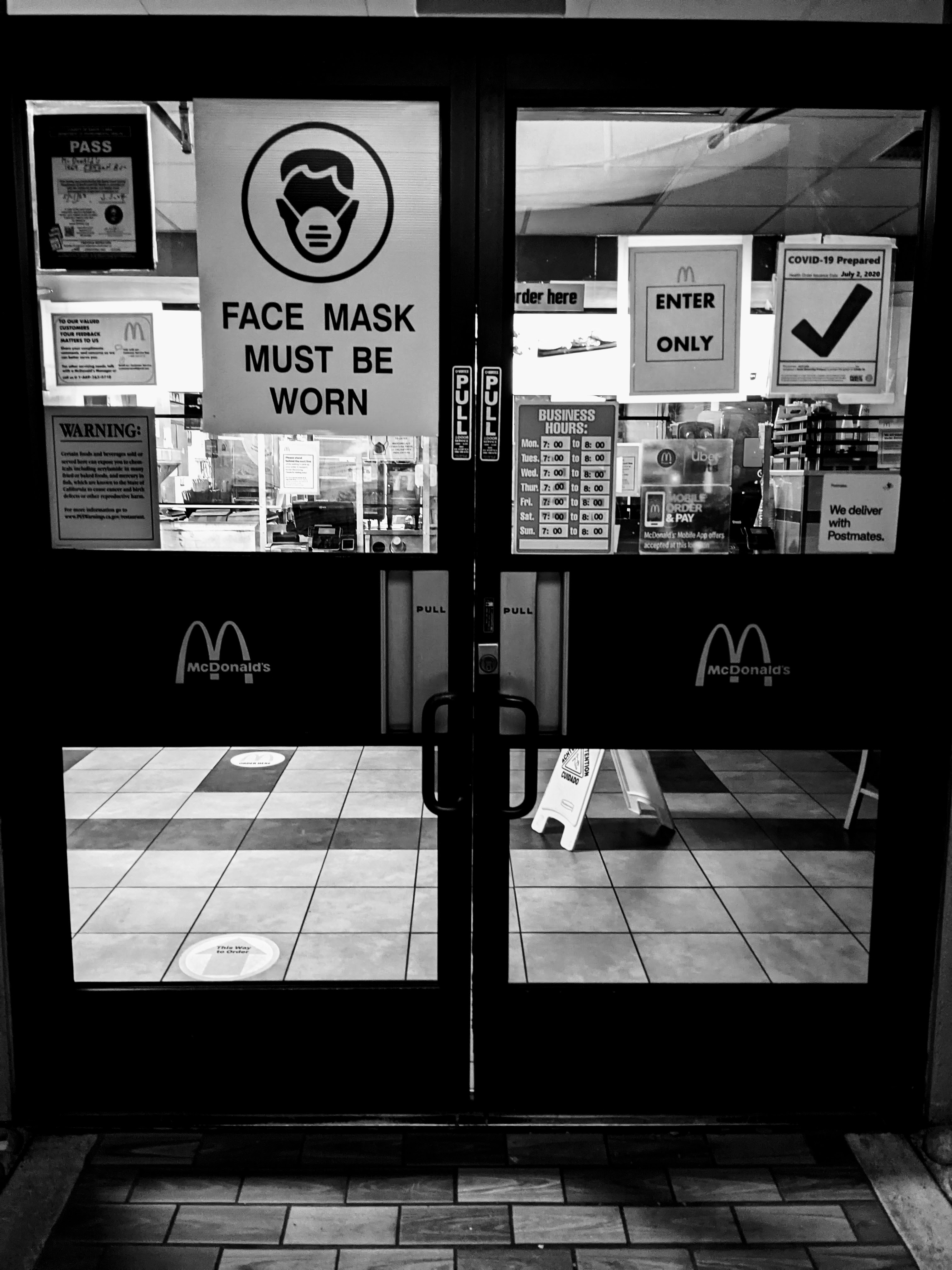
Further links listed by the Wikipedia page (not independently checked): - https://www.sfdph.org/dph/alerts/coronavirus.asp - https://www.smchealth.org/coronavirus - https://www.cityofberkeley.info/covid19/ - https://www.coronavirus.cchealth.org/ - https://coronavirus.marinhhs.org/ - https://www.countyofnapa.org/2739/Coronavirus Image rights Photograph description: A McDonald’s entrance in Cambrian Park, San Jose, California. Multiple notices are posted at the door, including social distancing notices. Creator: Travis Wise. License: CC BY 2.0 (https://creativecommons.org/licenses/by/2.0). Original image page: https://commons.wikimedia.org/wiki/File%3AMcDonald's_entrance%2C_Cambrian_Park%2C_San_Jose%2C_California.jpg. The image was resized for display; no other changes were made.