LGBTQ+ · San Francisco
What San Francisco’s Human Rights Commission Does—and Why It Matters
San Francisco’s Human Rights Commission is a charter-backed city agency focused on enforcing nondiscrimination policies, investigating complaints, and advancing equal treatment.
By KLGBT News Desk ·
San Francisco’s Human Rights Commission is one of the city’s central institutions for addressing discrimination and advancing civil rights. Created to promote equality and protect human rights, the commission works with city laws and policies intended to prevent discrimination and improve social and economic fairness.
The agency’s roots date to 1964, when an Interim Committee on Human Relations recommended creating a permanent commission. The San Francisco Board of Supervisors and Mayor John F. Shelley approved that recommendation in July of that year. More than two decades later, San Francisco voters gave the commission a formal place in the city’s governing structure, codifying it as a charter commission in June 1990.
Today, the commission is a department of the City and County of San Francisco. Its work includes enforcing municipal nondiscrimination ordinances and policies, protecting civil rights, and promoting equitable outcomes across the city. Those responsibilities can be especially significant for residents who face barriers because of identity or other forms of discrimination, including people seeking fair treatment in housing, employment, and public life.
The commission’s Civil Rights Division handles discrimination complaints in three major areas: housing, employment, and access to public places. According to the agency’s stated responsibilities, the division investigates and mediates those complaints. That means the commission can serve both an enforcement role and a dispute-resolution role when someone alleges that discriminatory treatment has occurred.
For San Francisco’s LGBTQ communities, the agency’s broad civil-rights mandate provides an important local framework for challenging unequal treatment. The research available here does not identify a single LGBTQ-specific program or current case, but the commission’s jurisdiction over discrimination and access to public places places it within the city’s larger system of protections relevant to LGBTQ residents.
The commission has also faced controversy. The supplied background identifies a corruption scandal involving the agency, but does not provide enough information about the allegations, timing, findings, or outcome to summarize that episode responsibly. Any account of that matter would require additional documentation.
The commission’s history reflects San Francisco’s long-standing effort to create a local body dedicated to human relations and nondiscrimination. Its charter status and complaint-related functions make it a significant part of the city’s civil-rights infrastructure, even as the details of its work depend on the specific laws, policies, and complaints before it.
Source and reuse information This backgrounder adapts factual material from “San Francisco Human Rights Commission” on Wikipedia: https://en.wikipedia.org/wiki/San_Francisco_Human_Rights_Commission The adapted text is released under the Creative Commons Attribution-ShareAlike 4.0 International license (CC BY-SA 4.0): https://creativecommons.org/licenses/by-sa/4.0/. This story has not been independently reviewed or fact-checked.
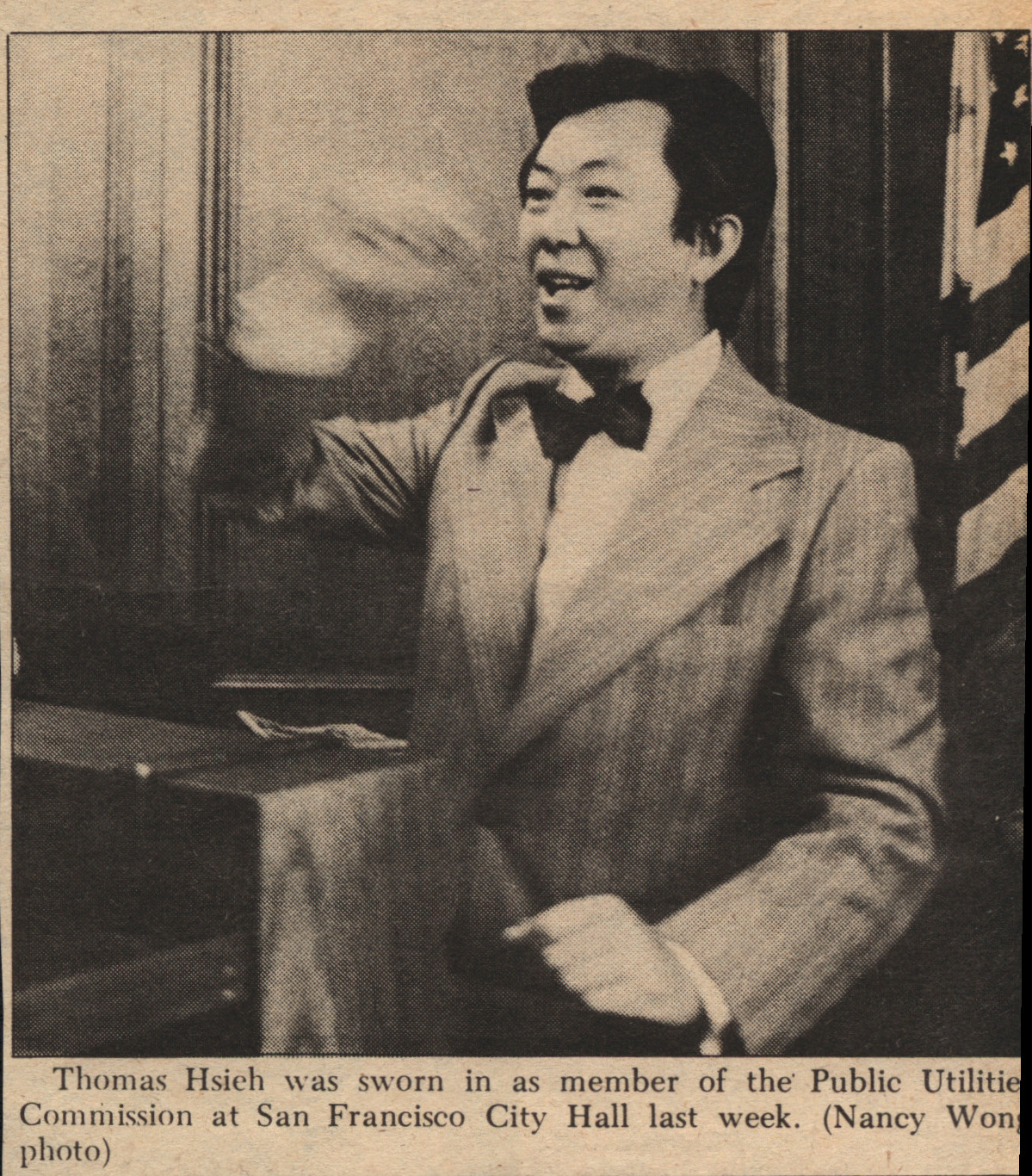
Further links listed by the Wikipedia page (not independently checked): - https://web.archive.org/web/20110514173031/http://www.sf-hrc.org/ftp/uploadedfiles/sfhumanrights/docs/NativeAmericanReport.pdf - https://web.archive.org/web/20100603215650/http://www.sf-hrc.org/ftp/uploadedfiles/sfhumanrights/RPI_Final_Report.pdf - https://web.archive.org/web/20110514173035/http://www.sf-hrc.org/ftp/uploadedfiles/sfhumanrights/docs/Violence.pdf - https://web.archive.org/web/20100603221215/http://www.sf-hrc.org/ftp/uploadedfiles/sfhumanrights/docs/finalreport.pdf - https://web.archive.org/web/20110514173042/http://www.sf-hrc.org/ftp/uploadedfiles/sfhumanrights/docs/econ.htm - https://web.archive.org/web/20110514173102/http://www.sf-hrc.org/ftp/uploadedfiles/sfhumanrights/Transgender_HIV_Division/TG%20Report%201994%20-%20revised.pdf Image rights Photograph description: Tear sheets from San Francisco newspaper 1970's. Mayor Dianne Feinstein, Human Rights Commissioner Pius Lee, Tom Hsieh, member of SF Public Utilities Commission, and California State Senator Milton Marks at Manilatown Senior Meal Site opening. Creator: Nancy Wong. License: CC BY-SA 4.0 (https://creativecommons.org/licenses/by-sa/4.0). Original image page: https://commons.wikimedia.org/wiki/File%3AThomas_Hsieh%2C_San_Francisco_Public_Utilities_Commission%2C_Tear_sheets_from_San_Francisco_newspaper_1970's_(cropped).jpg. The image was resized for display; no other changes were made.