LGBTQ+ · Seattle
How Seattle’s LGBTQ Community Built a Public Life
From a 19th-century sodomy law to the rise of Capitol Hill as a queer hub, Seattle’s LGBTQ history reflects decades of organizing, visibility and community-building.
By KLGBT News Desk ·
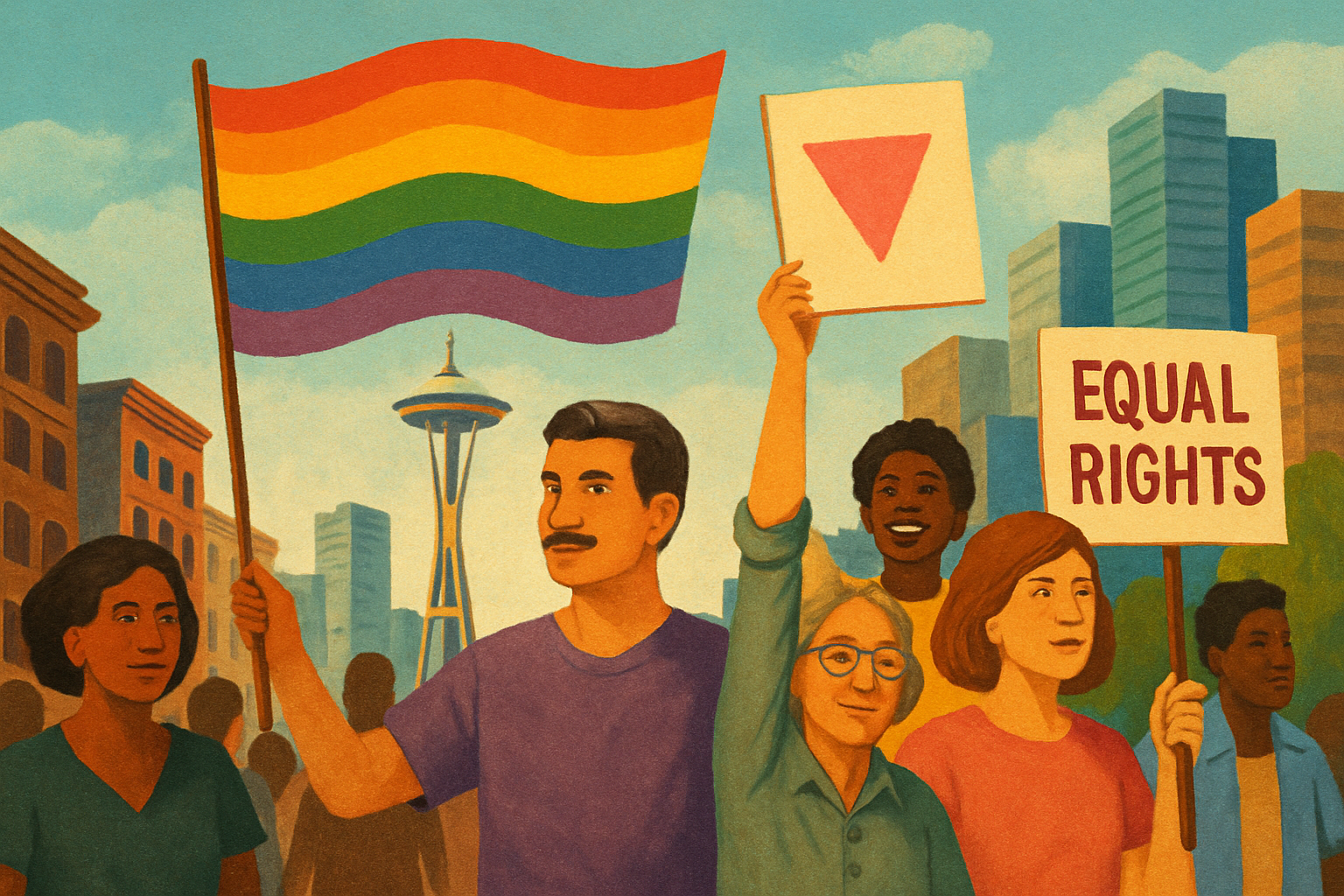
Seattle’s LGBTQ history stretches from an era when same-sex intimacy was criminalized to a city widely associated with queer community and culture. The documented record often begins with Washington’s sodomy law, enacted in 1893, but the story of LGBTQ life in Seattle also includes the businesses, organizers and neighborhoods that helped people find one another.
By the 1920s and 1930s, several Seattle establishments welcomed gay customers. Among them was the Double Header, which opened in 1934. The Pioneer Square bar became a long-running part of Seattle’s LGBTQ landscape and was regarded as a candidate for the country’s oldest continuously operating gay bar until it closed in December 2015. Its longevity offers a reminder that queer spaces existed in the city well before LGBTQ rights gained broader public recognition.
Police treatment of those spaces became a focus of legal action in the 1950s. On Nov. 19, 1958, an injunction directed Seattle police not to question patrons of gay bars without good cause tied to an actual investigation. The order marked an important limit on police scrutiny of people gathering in LGBTQ venues.
During the 1960s, Seattle developed a reputation as a comparatively accepting place for gay men and lesbians. That perception helped attract more LGBTQ people to the city and supported the growth of an increasingly visible community. Organizing also took shape during this period. In 1967, University of Washington professor Nick Heer founded the Dorian Society, identified as Seattle’s first group dedicated to supporting LGBTQ rights.
The community’s presence is especially associated with Capitol Hill. Over time, the neighborhood became known as a center of gay life, with LGBTQ-friendly businesses, nightlife and a resource center. For many residents and visitors, Capitol Hill has represented both a social gathering place and a visible expression of Seattle’s queer identity.
Historical accounts describe Seattle as home to one of the largest LGBTQ populations among U.S. cities, with 12.9 percent of city residents identifying as LGBTQ in the cited account. That figure is part of a broader story: community life was not created all at once, but built through bars and other gathering places, legal challenges, advocacy organizations and neighborhoods where LGBTQ people could live more openly.
Seattle’s LGBTQ history therefore includes both vulnerability and persistence. The record moves from criminalization and police scrutiny toward organized rights advocacy and established queer institutions. The spaces and groups that shaped that transition remain central to understanding how LGBTQ Seattle became visible—and how community can endure across generations.
Source and reuse information This backgrounder adapts factual material from “History of the LGBTQ community in Seattle” on Wikipedia: https://en.wikipedia.org/wiki/History_of_the_LGBTQ_community_in_Seattle The adapted text is released under the Creative Commons Attribution-ShareAlike 4.0 International license (CC BY-SA 4.0): https://creativecommons.org/licenses/by-sa/4.0/. This story has not been independently reviewed or fact-checked.
Further links listed by the Wikipedia page (not independently checked): - https://web.archive.org/web/20130910102753/http://seattletimes.com/html/localnews/2002908816_pbarwick04m.html - https://web.archive.org/web/20090223195746/http://www.dunsheehouse.org/ - https://books.google.com/books?id=V_wymDz62v4C&pg=PA16 - https://books.google.com/books?id=V_wymDz62v4C&pg=PA67 - https://books.google.com/books?id=V_wymDz62v4C&pg=PA125 - https://web.archive.org/web/20110606073453/http://www.sgn.org/sgnnews36_43/page11.cfm Image rights Original illustrative artwork created from story keywords. It is illustrative, not a documentary photograph.