Politics · Seattle
Sound Transit’s Regional Network Shapes How Seattle Moves
Sound Transit connects Seattle with communities across King, Pierce and Snohomish counties through Link light rail, Sounder trains and express buses—a regional system with more than 51 million trips in 2025.
By KLGBT News Desk ·
For many Seattle residents, getting across the region means relying on a network that extends well beyond the city limits. Sound Transit, the public agency serving the central Puget Sound region, operates Link light rail, Sounder commuter trains and Sound Transit Express buses across King, Pierce and Snohomish counties.
The scale of that network is significant. Sound Transit services recorded approximately 51 million passenger trips in 2025, with weekday ridership averaging more than 153,000. Those numbers reflect the agency’s role in connecting Seattle with neighboring communities, including destinations in Pierce and Snohomish counties.
Sound Transit also works within the region’s broader ORCA fare system. ORCA cards are used by multiple transit providers, allowing riders to navigate services operated by different agencies through a shared payment system. For people whose work, housing, health care or social lives span several cities, that regional coordination can be as important as any individual rail or bus route.
The agency was established in 1993 by King, Pierce and Snohomish counties with a mandate to create a regional rapid-transit system. Voters rejected an initial proposal in 1995, but approved the revised “Sound Move” plan in November 1996. That plan called for a combination of light rail, commuter rail and express bus service rather than relying on a single mode of transportation.
Sound Transit began operating express buses in September 1999, taking over routes that had previously been run by local transit agencies. The region’s first Sounder commuter rail service, connecting Tacoma and Seattle, began in December 2000. Tacoma Link—the light rail line now known as the T Line—opened in August 2003, establishing the agency’s first light rail service.
For Seattle’s LGBTQ community, the system’s regional reach offers a practical way to think about mobility: access to the city and its surrounding communities is shaped not only by local routes, but also by decisions made through a three-county public agency. Link, Sounder and express buses form different pieces of that network, while ORCA helps connect them within the region’s larger transit system.
Sound Transit’s history also shows that today’s network was built through a long public process. The agency moved from its creation in the early 1990s to voter approval, phased service launches and steadily expanding ridership. Its current role is therefore both regional and cumulative—an infrastructure project shaped over decades and used by millions of passengers each year.
Source and reuse information This backgrounder adapts factual material from “Sound Transit” on Wikipedia: https://en.wikipedia.org/wiki/Sound_Transit The adapted text is released under the Creative Commons Attribution-ShareAlike 4.0 International license (CC BY-SA 4.0): https://creativecommons.org/licenses/by-sa/4.0/. This story has not been independently reviewed or fact-checked.
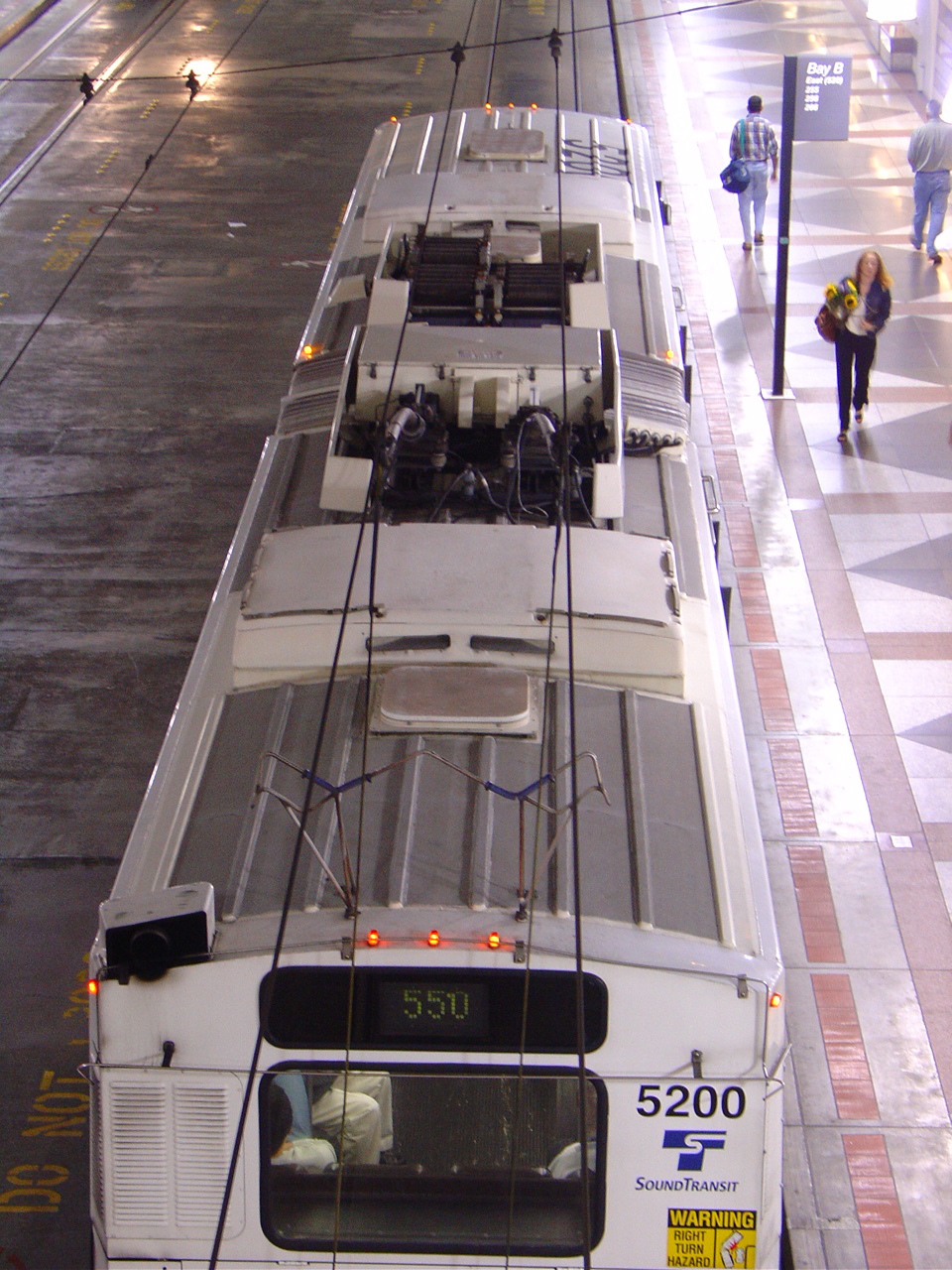
Further links listed by the Wikipedia page (not independently checked): - https://www.soundtransit.org/get-to-know-us/board-directors/board-members - https://www.soundtransit.org/ride-with-us/know-before-you-go/new-to-sound-transit - https://www.soundtransit.org/ - https://www.soundtransit.org/get-to-know-us/board-directors - https://apps.leg.wa.gov/rcw/default.aspx?cite=81.112.040 - https://www.seattletimes.com/seattle-news/transportation/state-senator-calls-for-direct-elections-of-transit-board-members/ Image rights Photograph description: King County Metro dual-mode Breda bus leased by Sound Transit in the Downtown Seattle Transit Tunnel. No. 5200 was one of 20 Breda dual-mode buses (out of a total of 236) that Metro leased to Sound Transit from 1999 to 2004. Creator: Oran Viriyincy. License: CC BY-SA 2.0 (https://creativecommons.org/licenses/by-sa/2.0). Original image page: https://commons.wikimedia.org/wiki/File%3ASound_Transit_Breda.jpg. The image was resized for display; no other changes were made.