Politics · Washington
Gloria Richardson’s Washington Legacy Reached Beyond the Cambridge Movement
Gloria Richardson became a leading figure in the early-1960s Cambridge movement and was honored at the 1963 March on Washington, though she and five other women were not invited to address the crowd.
By KLGBT News Desk ·
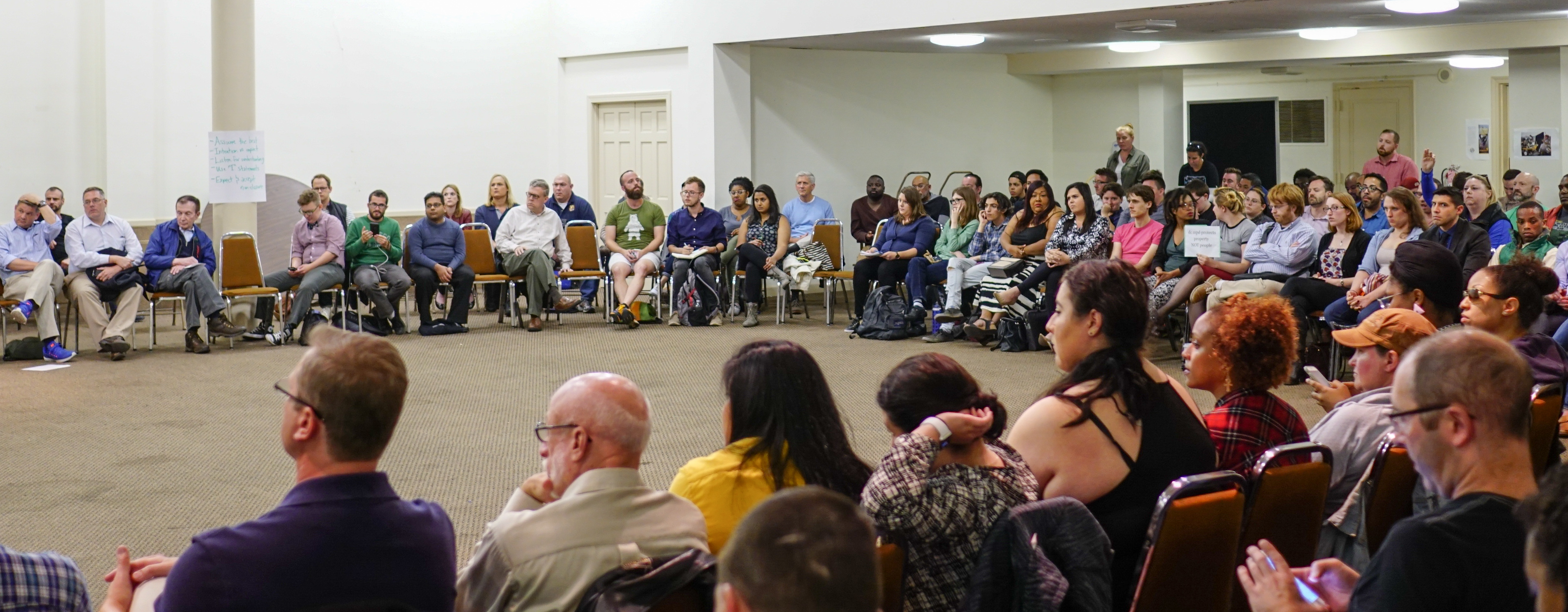
Gloria Richardson’s civil rights work was rooted in Cambridge, Maryland, but one of its most visible moments unfolded in Washington in 1963.
Richardson, born Gloria St. Clair Hayes in Baltimore in 1922, became the best-known leader of the Cambridge movement, a civil rights campaign on Maryland’s Eastern Shore during the early 1960s. Her activism placed her among the major figures of the national Civil Rights Movement and connected a local struggle over racial equality to federal efforts at reconciliation.
In July 1963, Richardson signed the Treaty of Cambridge alongside Attorney General Robert F. Kennedy and state and local officials. The agreement followed a riot in Cambridge the previous month. Its purpose was to establish a path toward reconciliation and to commit the parties to change. The treaty made Richardson a participant in negotiations that linked community-level activism with the federal government’s response to civil rights conflict.
The following month, Richardson traveled to Washington for the March on Washington for Jobs and Freedom. She and five other women were recognized from the stage at the Lincoln Memorial. Their presence acknowledged women’s contributions to the movement, but they were not invited to speak to the assembled crowd. That contrast—public recognition without an opportunity to address the marchers—formed part of Richardson’s place in the event’s history.
Richardson’s Washington appearance is significant because it shows how the movement’s public image could differ from the work of organizing and confrontation that made national attention possible. Her leadership in Cambridge had brought her into a formal agreement with government officials, while the March on Washington placed her before a national audience without giving her the same platform as the event’s male speakers.
In 1964, Richardson moved to New York City. There, she continued civil rights and economic-development work locally in Harlem. Her career therefore crossed several settings: Baltimore, where she was born; Cambridge, where she led a major civil rights campaign; Washington, where she signed a federal-state-local agreement and was honored at the Lincoln Memorial; and Harlem, where she pursued further community work.
Richardson died on July 15, 2021. Her story remains especially relevant to understanding the breadth of the 1963 movement in Washington: not only the mass demonstration remembered from the National Mall, but also the local campaigns, negotiations and women leaders whose work helped define the era.
Source and reuse information This automatically generated backgrounder adapts text from “Gloria Richardson” on Wikipedia: https://en.wikipedia.org/wiki/Gloria_Richardson The adapted text is released under the Creative Commons Attribution-ShareAlike 4.0 International license (CC BY-SA 4.0): https://creativecommons.org/licenses/by-sa/4.0/. The source article’s linked references are provided below where available. This story has not been independently reviewed or fact-checked.
Further links listed by the Wikipedia page (not independently checked): - https://viaf.org/viaf/34422825 - https://snccdigital.org/people/gloria-richardson/ - https://www.kentuckypress.com/live/title_detail.php?titleid=5498 - https://snaccooperative.org/ark:/99166/w65z4cj8 - https://books.google.com/books?id=05uJSLy351MC - https://books.google.com/books?id=SEfOhvXSvZsC Image rights Photograph description: A historic dialogue with some of the LGBTQ Communities of Washington, DC. Guided by some of the most transformational leaders of our time. Everyone deserves to be safe. Creator: Ted Eytan. License: CC BY-SA 2.0 (https://creativecommons.org/licenses/by-sa/2.0). Original image page: https://commons.wikimedia.org/wiki/File%3A2017.05.09_LGBTQ_Communities_Dialogue_and_Capital_Pride_Board_Meeting_Washington_DC_USA_4553_(34515661076).jpg. The image was resized for display; no other changes were made.